
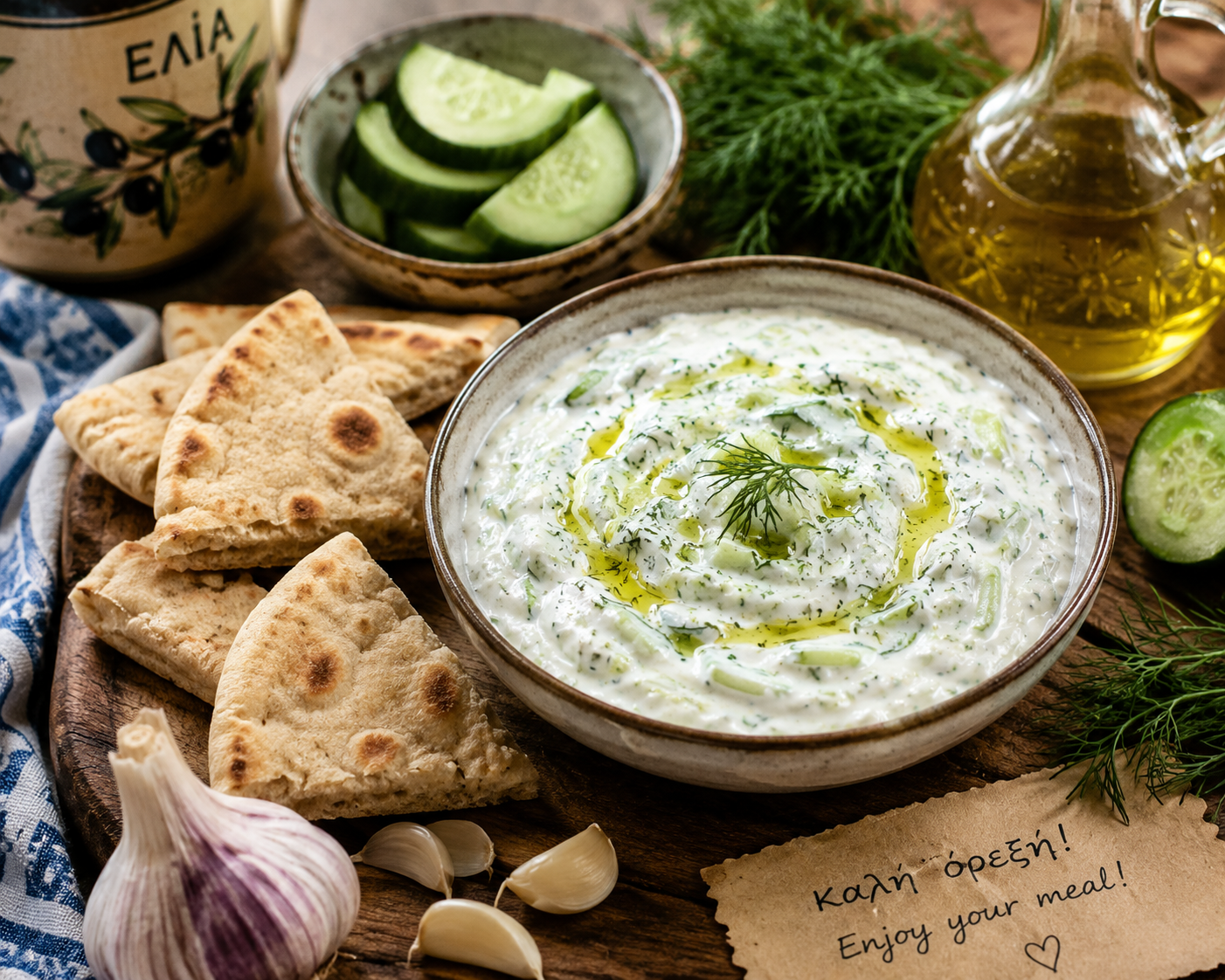
An easy recipe that brings happiness to every dish.
One of my greatest joys is sharing traditional Greek recipes with family and friends, and one of my favorites is this traditional Greek tzatziki sauce recipe that has been a staple in my kitchen for years.
While I truly enjoy cooking, what brings me the most happiness is watching people gather around the table and experience the goodness of authentic, home-cooked meals together.
Tzatziki is a perfect example of how simple ingredients can create something unforgettable. You can find countless recipes online, and grocery stores offer just as many variations—sometimes called a dip, sometimes a sauce—each slightly different in flavor and texture depending on the ingredients and spices used.
Though traditional Greek tzatziki requires only a handful of ingredients, it’s one of those recipes that can either be absolutely incredible or completely miss the mark. Unfortunately, some people try a less-than-authentic version and never get to experience just how fresh and flavorful it is meant to taste.
The recipe I’m sharing today has been part of my family’s meals for years. It’s incredibly versatile—I use it as a sauce for chicken, pork, and lamb, a dip for warm pita bread and fresh vegetables, and even as a healthier alternative to mayo in chicken or tuna salad. Honestly, it’s so good I could eat it straight from the spoon.
What Makes Authentic Greek Tzatziki Different?
uthentic Greek tzatziki is simple, fresh, and full of flavor. The key is using real Greek yogurt, fresh garlic, and properly drained cucumber so the sauce stays thick and creamy instead of watery.
Many store-bought versions skip important steps or add unnecessary ingredients, but traditional Greek tzatziki relies on a handful of fresh ingredients that work beautifully together. Letting the sauce rest in the refrigerator for a few hours allows the garlic, dill, and cucumber to fully blend together for the best flavor.
Like so many traditional Greek recipes, the beauty is found in the simplicity.
Not only is tzatziki delicious, but it’s also a healthy choice. It’s packed with protein and healthy fats, naturally low in carbs, and full of fresh flavor.
For me, Greek food has never just been about food.
It’s memory. It’s family gathered around loud tables. It’s watching someone tear apart warm pita bread while stories and laughter bounce across the room. It’s the smell of garlic, dill, and olive oil filling the kitchen while someone inevitably says, “Eat more.”
Some of my favorite memories growing up were centered around meals that brought people together, and even now, making traditional Greek recipes feels like staying connected to the people, culture, and heritage that shaped me.
Food carries stories. And this traditional Greek tzatziki sauce recipe is one of mine. I hope this traditional Greek tzatziki sauce recipe brings as much joy to your table as it has to mine over the years.
καλή όρεξη! (Enjoy your meal!)
Tzatziki Sauce Recipe

Why Preserving Family Stories Matters
The older I get, the more I realize how much family history can disappear in a single generation if nobody takes the time to preserve it.
So many of the recipes, traditions, stories, and small moments that shaped us are passed down around kitchen tables long before they are ever written down. Food has a way of carrying memory, culture, and connection in a way few other things can.
That realization is a big part of why I created both my free devotional and Hope Story Academy. I want to help people preserve the stories, faith, and family history that might otherwise be lost with time.
Sometimes the smallest traditions become the strongest connections to where we came from.And if you’d like more reflections on faith, family, forgiveness, and preserving the stories that shape us, subscribe here, and new posts will be delivered straight to your inbox.
If you love Greek culture and stories rooted in faith and resilience, I’d also encourage you to read Hope Is My Anchor. It tells the true story of my father’s journey from Crete to America and everything he carried in between.
Leave a Reply